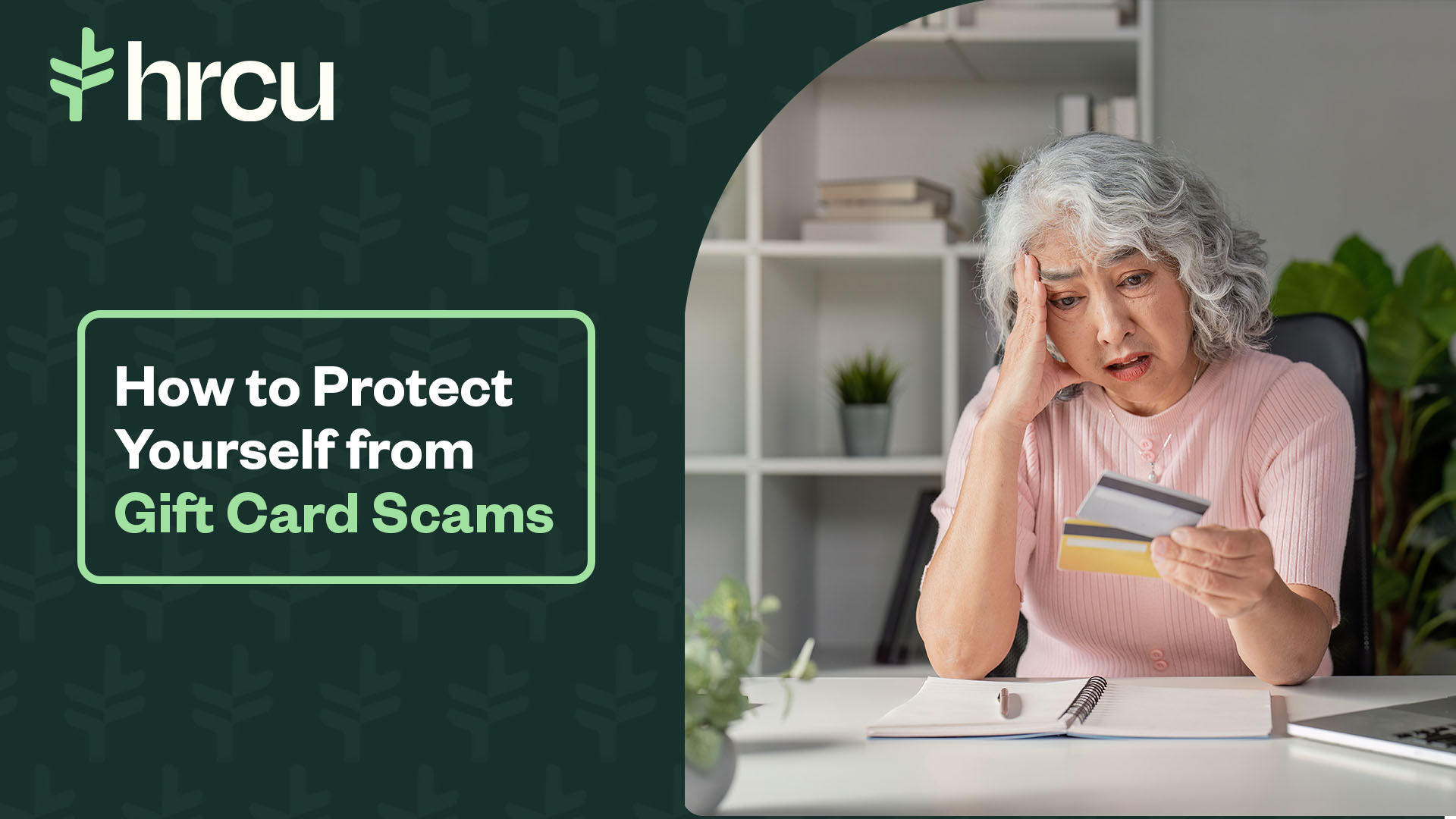
Gift cards are meant to be thoughtful gifts, but scammers have found ways to turn them into fast cash. Gift card scams are one of the most common types of fraud affecting credit union members, and they often rely on fear, urgency, or emotional pressure.
The good news? Knowing how these scams work makes them much easier to spot and avoid.
How gift card scams work
Most gift card scams follow a similar pattern:
- You’re contacted unexpectedly about an urgent problem. Common examples include:
- A call claiming you owe back taxes or face arrest
- A message saying your computer, bank account, or online shopping account has been compromised
- You’re told to buy gift cards to fix the issue. The scammer may be very specific about where to buy them and which type to purchase.
- You’re warned not to talk to anyone, including store employees, or coached on what to say if someone asks questions. This is a major red flag.
- You’re asked to share the card numbers and PINs, often by text, email, or messaging apps.
- The money is gone. Once the scammer has the card details, they redeem the funds immediately. By the time the truth comes out, the money is usually unrecoverable.
If anyone pressures you to pay with gift cards, it’s almost certainly a scam.

Common types of gift card scams
Scammers use different stories, but the goal is always the same: to get you to buy gift cards and hand over the numbers.
1. Impersonation scams
Fraudsters pretend to be government agencies, utility companies, tech support, or even company leadership. They may threaten arrest, service shutoff, or account suspension unless you pay immediately using gift cards.
2. Emergency and romance scams
You might hear from someone claiming to be a family member in trouble, or an online romantic partner who suddenly needs help. These scams often play on emotion and urgency to push quick decisions.
3. Card draining scams
In some cases, criminals steal gift cards from store displays, record the card numbers and PINs, then reseal the packaging. Once the card is purchased and activated, the balance is drained—sometimes within minutes.
4. Prize, sweepstakes, and fake check scams
You’re told you’ve won a prize or received a check but must pay fees or taxes using gift cards to claim it. Legitimate prizes never require upfront payment.
Who scammers often target
Gift card scams can happen to anyone, but scammers often focus on:
- Older adults, who may be more trusting or targeted for larger dollar amounts
- People in online relationships, where trust is built before money is requested
- “Emergency” scenarios, like a call about a grandchild or loved one in trouble
- Tech or account alerts, claiming Amazon, Apple, or financial accounts are compromised
- Job seekers, who are sent fake checks and instructed to buy gift cards for “equipment”

How to protect yourself
- No legitimate business or agency accepts gift cards as payment.
- Slow down. Scammers rely on panic and urgency.
- Talk to someone you trust before sending money or sharing information.
- Never share gift card numbers or PINs with anyone.
- Trust your instincts. If something feels off, it probably is.
What to do if you think you’ve been targeted
If you believe you’re being pressured into a gift card purchase, or if you’ve already shared card details, contact your credit union right away. The sooner you act, the better your chances of limiting the damage.
At HRCU, we’re here to help you protect your finances and stay informed. Fraudsters are constantly changing tactics, but awareness is your strongest defense.