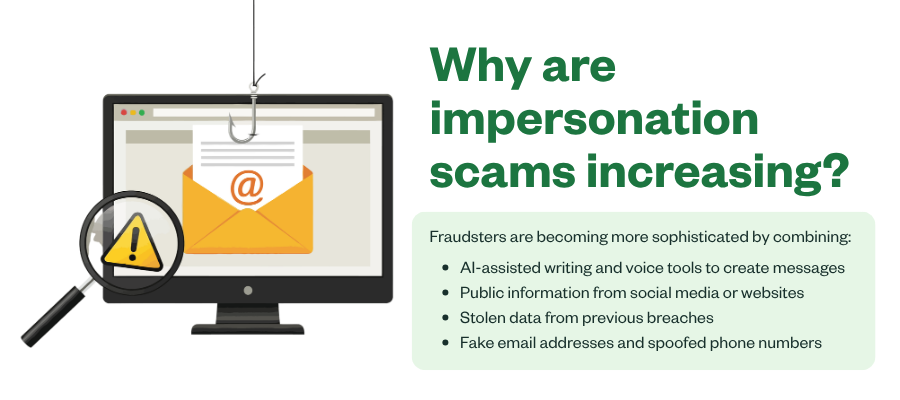
We at HRCU believe your financial wellbeing starts with understanding how to stay safe. One of the fastest-growing fraud risks today is impersonation scams - schemes designed to look legitimate and feel urgent. These scams are effective because they rely on something we all use every day: trust. Knowing what to look for can help you stay one step ahead.
What is an impersonation scam?
An impersonation scam happens when someone pretends to be a person or organization you trust in order to get you to send money, share sensitive information, or give them access to your accounts.
They may claim to be:
- A company representative or manager
- A familiar business or service provider
- Your financial institution
- A government agency
- Even someone claiming to be you
The message often feels real and that’s exactly the point.
Common types of impersonation scams
1. Executive or company impersonation
You may receive a message that appears to come from someone in a position of authority, asking you to act quickly and often involving money or sensitive information.
Watch for: urgency, secrecy, or requests that don’t follow normal procedures.
2. Vendor or billing impersonation
Scammers may pose as a company you do business with and request payment changes or ask you to resend a payment.
Watch for: unexpected changes to payment instructions without confirmation.
3. Member or account impersonation
Fraudsters may attempt to pose as you or another member to gain access to accounts or move money.
Watch for: pressure to bypass security steps or rush the process.
4. Brand or government impersonation
You may receive emails, texts, or calls claiming to be from a trusted organization such as a bank or government agency.
Watch for: threats, legal warnings, or demands for immediate action.

Red flags to watch for
If something feels off, it’s worth taking a closer look. Common warning signs include:
- Urgent or emotional language such as “act now” or “final notice”
- Requests to skip normal processes or safeguards
- Unexpected requests for personal or financial information
- Slight misspellings or unusual email addresses
- Someone unwilling to verify their identity
How to protect yourself
- Verify the request
Use a trusted phone number or contact method to confirm the request. Never rely on the contact information provided in the message. - Follow normal processes
Do not skip steps or rush decisions. Legitimate requests can wait for proper verification. - Take a moment to think
Scammers rely on urgency. Slowing down gives you time to evaluate the situation. - Keep your information secure
Never share passwords, one-time passcodes, or other sensitive details. Even if the request appears to come from a trusted source.

What to do if you suspect a scam
If you receive a suspicious message or call:
- Do not respond or click on any links
- Save any messages or screenshots for reference
- Contact your financial institution right away
- Act quickly. Early action can help prevent further issues
Final takeaway
Impersonation scams succeed when trust replaces verification. They fail when you take a moment to pause, ask questions, and follow the right steps. At HRCU, we’re here to help you stay informed and confident in your financial decisions. If something doesn’t feel right, reach out. We’re always here to help guide you forward.